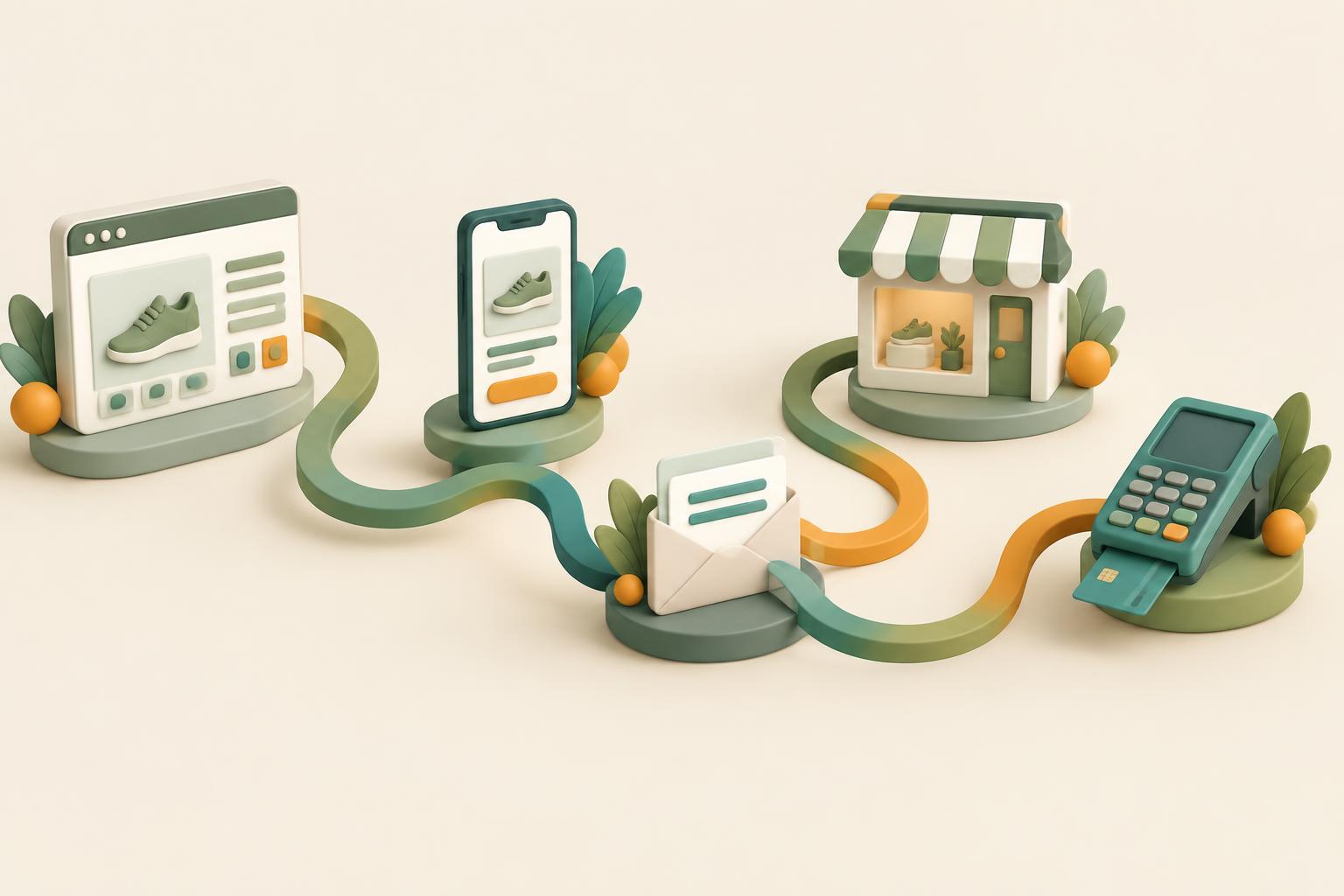
The path a customer takes to find, learn about, and purchase from your business is rarely a straight line anymore. They might start on their phone during a lunch break, switch to a desktop later, ask a question via text, see an ad on social media, or even walk into your physical location. For small businesses, this reality means you need to create a consistent, smooth experience across every single one of these interactions. If the experience breaks down at any point – say, your website isn't mobile-friendly, or a text message contradicts an email offer – you risk losing that customer to a competitor who makes things easier.
This is where omnichannel marketing comes in. It's about designing a unified, continuous customer journey where every interaction, regardless of the channel, feels like part of the same conversation. It’s not just about being on multiple platforms; it’s about making those platforms work together seamlessly to serve your customer.
What Exactly is Omnichannel Marketing Today?
Think of omnichannel marketing as providing a single, consistent experience across all the ways a customer might interact with your business. It's built on the understanding that customers are more connected and informed than ever. They expect their journey with you to be personalized, convenient, and coherent, whether they're searching on Google for an answer (possibly getting an AI-generated summary!), browsing your site, checking social media, or receiving a text message. The goal is to make it easy for them to pick up where they left off, no matter the device or channel.
This means that data from every touchpoint – your website, social media, email campaigns, in-store visits, even phone calls – should ideally feed into a single, comprehensive view of that customer. When you have this unified perspective, you can deliver truly relevant messages, anticipate their needs, and simplify their buying process. It’s a significant shift from older strategies where each channel operated in its own silo.
Building a Unified Customer View (It’s Easier Than You Think)
The core of effective omnichannel marketing is understanding your customer deeply. This requires gathering and centralizing information about their preferences, their interactions, and their journey. Many small businesses get intimidated by this, thinking they need complex, expensive software. While robust CRM (Customer Relationship Management) platforms are incredibly helpful, you can start simple.
Here's how to approach it practically:
First, map out your customer's journey. How do they typically find you? What questions do they ask? Where do they go to research? What makes them decide to buy? This exercise helps identify all the touchpoints you need to connect.
Next, focus on centralizing data. This doesn't mean you need a single, magical platform for everything. Instead, it means ensuring that information collected in one place can inform actions in another. For example, if someone signs up for your email list from your website, their preferences should influence the emails they receive. If they abandon a cart, a targeted email or even a text message reminder can be triggered. Tools like your email marketing platform, POS and Payment Solutions, and even your Google Business Profile can provide valuable customer insights.
Personalization is key. Once you have a better understanding of your customer, you can tailor your messaging. Instead of generic blasts, you can send emails with products they've shown interest in, social media ads relevant to their past behavior, or even a personalized text message about a local event. This level of relevance builds trust and makes customers feel valued.
Practical Steps for Small Businesses
Implementing an omnichannel strategy doesn't require a massive marketing team or an unlimited budget. Here's a practical roadmap:
- Prioritize Your Online Presence: Your website is often the hub of your digital world. Ensure it's mobile-responsive, loads quickly, and provides clear pathways for customers to learn, engage, and buy. Beyond your site, optimize your Google Business Profile. It's often the first digital interaction local customers have, especially with the rise of 'near me' searches and AI-driven answers in search results. Think about AI Search Visibility as a new frontier for being found.
- Connect Your Communications: If you use email marketing, text messages (SMS), and social media, make sure they complement each other. Avoid sending the same message on every channel at the same time. Instead, use each channel for its strengths. An email might provide detailed information, a text could be a quick reminder, and social media might showcase your brand personality. Check out our guidance on Email and Text Marketing for strategies that work.
- Leverage Customer Data (Responsibly): With evolving privacy regulations, it’s crucial to collect customer data ethically and transparently. Use analytics from your website, social media, and email campaigns to understand what content resonates, what products are popular, and where customers drop off. Don't invent statistics; focus on understanding the patterns in your own data to make informed decisions.
- Cultivate Reviews and Reputation: Online reviews are a critical part of the customer journey. Encourage satisfied customers to leave feedback on Google, Yelp, or industry-specific sites. Respond to all reviews, positive and negative, to show you're engaged. Your online reputation directly impacts how new customers perceive you across all channels.
- Automate Where Possible: Small businesses are often strapped for time. Look for opportunities to automate routine tasks, like abandoned cart reminders, welcome sequences for new subscribers, or appointment confirmations. This frees up your time to focus on strategic thinking and direct customer interaction.
The Payoff: Why It's Worth the Effort
Developing an effective omnichannel strategy might seem like a lot of work, but the payoff for small businesses is significant. Customers who engage with businesses across multiple channels tend to be more loyal, spend more over time, and are more likely to recommend you to others. They appreciate the convenience and the feeling of being understood.
In a world where customers have endless choices and decreasing patience for disjointed experiences, providing a seamless journey is no longer an optional extra – it's a competitive necessity. It builds stronger relationships, drives repeat business, and ultimately, helps your small business thrive in the digital age.
Ready to build a truly connected customer experience for your business? We can help you navigate the complexities and create a practical, effective omnichannel strategy. Book a call with us today to discuss your unique needs and how we can support your growth.