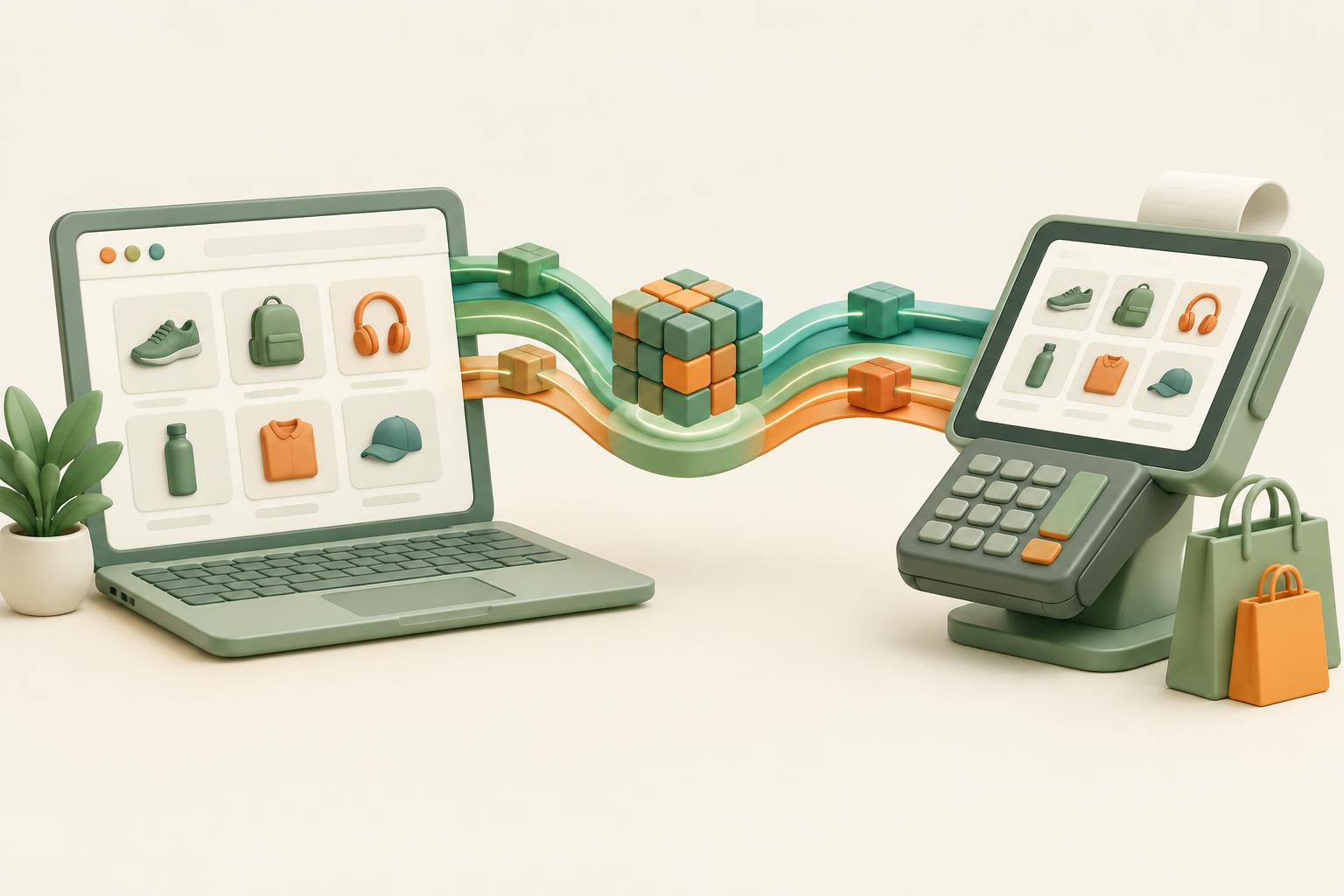
Walk into most small businesses and you'll find two systems that have never met: the website that marketing built, and the point-of-sale that actually runs the day. One collects interest, the other collects money, and nobody is connecting the dots between them.
That gap costs more than most owners realize. A customer finds you online, loves what they see, then walks in and gets a completely different experience. Or they buy from you every week in person, and your website has no idea they exist — no follow-up, no review request, no reason to come back.
When your website and POS share information, practical things start happening. Online ordering stops being a separate menu someone has to update by hand. Gift cards work in both places. Customer contact info collected at the register can fuel an email list that brings people back during your slow season.
Where to start
It also changes what you can measure. Instead of guessing whether the website 'does anything,' you can see that a search visitor became a first-time order, and a first-time order became a regular. That's the difference between marketing as an expense and marketing as a system.
You don't need an enterprise tech stack to do this. Most modern POS platforms integrate cleanly with a well-built website. What you need is someone willing to set them up as one system instead of two vendors pointing at each other.
That's how we approach it at Digital Harvest. Websites, SEO, and POS aren't separate services we happen to sell — they're parts of the same machine, and they work best when they're built to support one another.