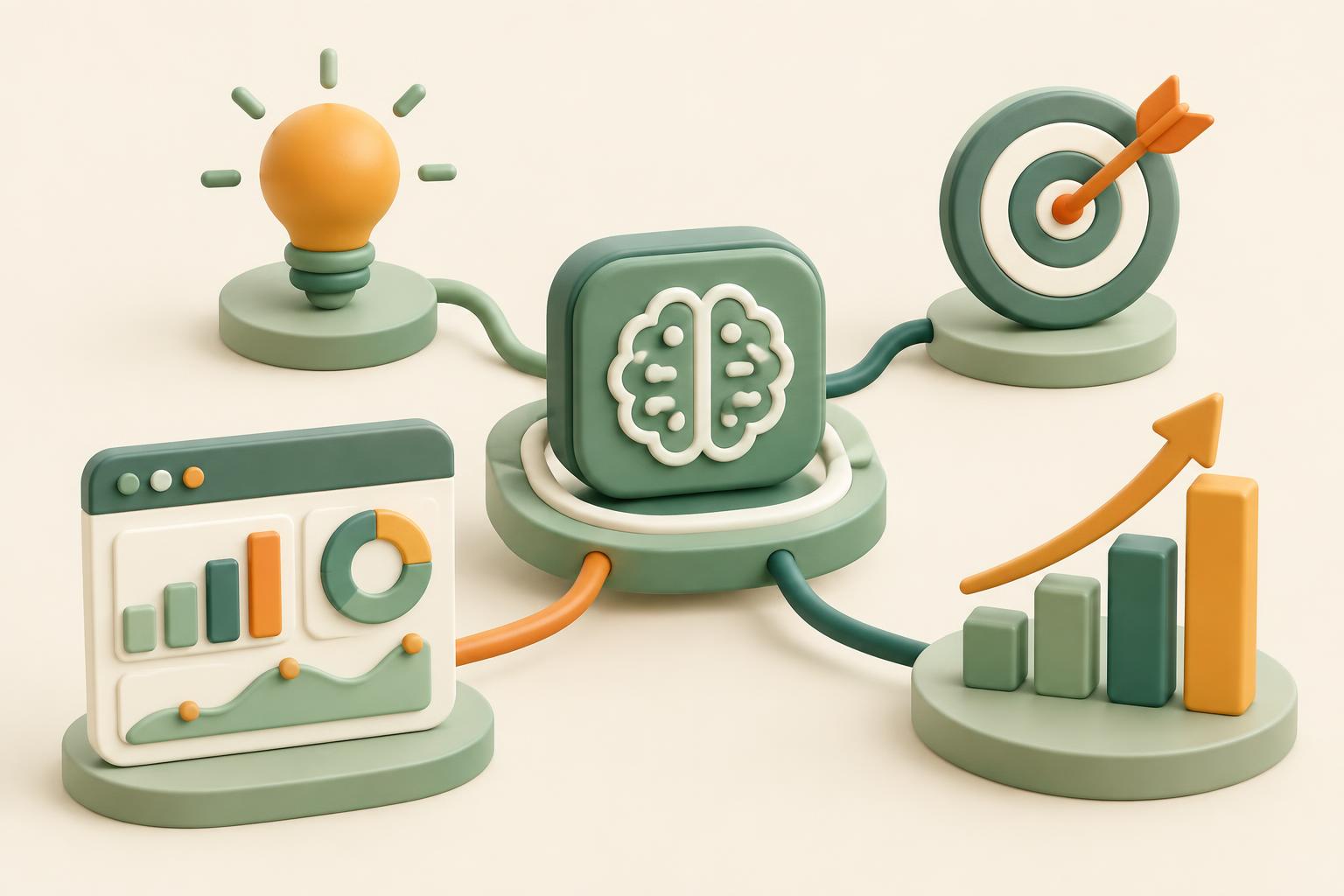
Artificial Intelligence (AI) has rapidly shifted from a sci-fi concept to an everyday reality, fundamentally changing how businesses operate and market themselves. For small business owners in Wisconsin and beyond, AI isn't just for tech giants; it's a practical suite of tools that can level the playing field, enhance customer connections, and streamline your marketing efforts.
Forget the hype. Let’s talk about the real-world applications of AI in marketing – the honest, practical ways it can actually help your business grow in September 2026 and beyond. This isn't about replacing human creativity or insight; it's about augmenting it, allowing you to work smarter, not just harder.
Understanding Your Audience with AI Insights
At its core, effective marketing is about understanding your customers. AI excels at processing vast amounts of data to uncover patterns and predict behaviors that would be impossible for a human to discern. This translates directly into more targeted and effective campaigns.
Imagine AI analyzing your past customer interactions, website visits, purchase history, and even social media engagement. It can identify which products or services specific customer segments are most likely to be interested in next, or what kind of messaging resonates most effectively. This deep dive into your data helps you tailor your offerings and communications, moving beyond guesswork to data-driven decisions.
This also extends to market forecasting. AI can analyze sales trends, economic indicators, and even competitor activity to help you anticipate demand for your products or services. Knowing when to boost inventory or when to run a promotion isn’t just good planning; it’s a competitive advantage that directly impacts your bottom line.
Smarter Customer Engagement and Support
One of the most visible applications of AI for small businesses is in enhancing customer interactions. Chatbots, powered by AI, are no longer clunky, frustrating tools. Modern AI chatbots can handle a significant portion of routine customer inquiries, provide instant answers to FAQs, and even guide customers through a purchase process, all while maintaining a consistent brand voice. This frees up your human team to focus on more complex issues, leading to better customer satisfaction and more efficient operations.
Beyond immediate support, AI helps personalize the customer journey. When someone visits your website or interacts with your social media, AI can help deliver relevant content or product recommendations based on their browsing history and preferences. This kind of personalized experience is what today's consumers expect, and it significantly boosts engagement and conversion rates.
Consider how AI can assist with your email and text marketing. It can help segment your audience more intelligently, suggest optimal send times, and even assist in crafting compelling subject lines and body copy that are more likely to convert. For instance, an AI could identify customers who haven't purchased in a while and suggest a targeted re-engagement campaign.
Optimizing Your Digital Presence and Advertising
The digital landscape is constantly evolving, with new search behaviors and advertising methods. AI is critical in navigating these changes, especially for small businesses with limited resources.
Search engine optimization (SEO) is no longer just about keywords. With the rise of AI-powered answers and Answer Engine Optimization (AEO), search engines are getting smarter at understanding user intent behind queries. AI tools can help you identify conversational keywords, anticipate questions your customers might ask, and optimize your content to appear in these rich answer formats. This means your business needs to think beyond traditional SEO and embrace AI search visibility strategies to truly stand out.
In the realm of digital advertising, AI plays a pivotal role in programmatic ad buying. Instead of manually placing ads, AI algorithms can automatically bid on ad space and optimize campaigns in real-time based on performance data. This ensures your ads are shown to the right audience, at the right time, on the right platforms, maximizing your return on investment (ROI). AI can analyze ad creatives, target demographics, and bidding strategies to continuously refine your campaigns, making your ad spend go further.
AI also offers dynamic pricing capabilities. For businesses with fluctuating inventory or demand, AI can analyze real-time market conditions, competitor pricing, and customer behavior to automatically adjust your prices, helping you optimize sales and profitability.
Streamlining Content and Reputation Management
Creating engaging content is time-consuming. AI can assist in content creation by generating ideas, outlines, and even drafting sections of blog posts, social media updates, or email newsletters. While human oversight is always necessary to ensure accuracy and brand voice, AI acts as a powerful assistant, accelerating your content production. It can also help curate relevant third-party content to share with your audience, keeping your feeds fresh and informative.
Managing your online reputation is another area where AI shines. Monitoring reviews and social mentions manually is a huge task for any small business. AI-powered tools can track these mentions across various platforms, identify sentiment (positive or negative), and even flag urgent issues that require your immediate attention. This allows you to respond promptly and appropriately, safeguarding your brand's image and building stronger customer relationships.
Consider how AI can augment your reviews and reputation management by analyzing feedback patterns, helping you understand common praises or complaints, and even suggesting personalized responses that address specific customer concerns effectively.
The integration of AI into marketing isn't about fancy, inaccessible technology. It's about practical tools that help small businesses make smarter decisions, engage customers more effectively, and ultimately, grow. Don't let your business fall behind; embrace the intelligent advantages AI offers today.
Ready to explore how AI can specifically benefit your marketing strategy? Let's talk about the practical solutions for your business. Book a call with Digital Harvest Marketing to see how we can help you harness the power of AI.